


IZBrunch brings together decision-makers from IZB startups, scientists, and other key players in the life sciences ecosystem around the Martinsried/Großhadern campus. The IZB hosts this event once a quarter at the Faculty Club.
Each gathering focuses on a current topic in biotechnology, medicine, and the life sciences. Topics range from the use of artificial intelligence in drug development and theranostics in oncology, to the use of yeast in biotechnology. Two speakers explore the chosen topic from different perspectives.
Following the presentations, a business lunch offers the opportunity to deepen the conversation. In this way, IZBrunch combines expert insights with in-person networking, creating a space to forge new connections within the Munich biotech community.
Attendance is limited to 70 people. Advance registration is required.
Registration: IZBrunch@izb-online.de
Please note: Attendance is strictly limited to those with a confirmed registration.
Who attends?
Faculty Club members, directors and research group leaders of the Max Planck Institutes, LMU professors, managing directors and board members of the IZB companies, and executives of the Martinsried/Großhadern campus.
Format:
Face2Face event with keynote speeches (15 min.) plus Q&A followed by business lunch
Time:
10:45 a.m. to 1 p.m.
Location:
Restaurant SEVEN AND MORE
in the IZB Residence CAMPUS AT HOME
Am Klopferspitz 21
82152 Planegg/Martinsried
Registration: koehler@izb-online.de
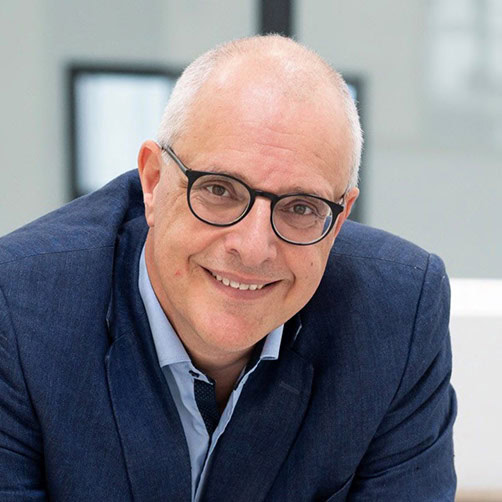
Prof. Andreas Bausch
Heinz Nixdorf Chair in Biophysical Engineering of Living Matter, TUM School of Natural Sciences
Topic: Engineering Biology: From Variability to Predictability
Standardized and Scalable Organoids for Data-Driven Discovery and Applications. Organoids hold great promise for biomedical applications, yet limited reproducibility, scalability, and predictive reliability remain major barriers to their widespread use. Overcoming these challenges requires a concerted effort to develop new engineering technologies that enable controlled, standardized, and scalable organoid production. In this talk, I will present our approaches toward this goal, paving the way for reliable applications and the generation of high-quality, systematic datasets
Bio: Prof. Andreas Bausch is the Founding Director of the Center for Organoid Systems (COS) and the Center for Functional Protein Assemblies (CPA) at the Technical University of Munich (TUM). He initiated and co-directs the Excellence Cluster BioSysteM and serves as Director of the Venture Lab BioSysteM. In 2025, he was awarded the endowed Heinz Nixdorf Professorship in Biophysical Engineering of Living Matter. Following his physics training at TUM and the Université de Montréal, he conducted postdoctoral research at Harvard University before becoming Professor of Cellular Biophysics at TUM in 2008. Internationally recognized for pioneering contributions to the physics of living systems, his research has advanced our fundamental understanding of cytoskeletal mechanics, cellular self-organization, and organoid morphogenesis. Combining quantitative physics with innovative bioengineering technologies, his work establishes new principles for controlling and engineering living matter, bridging fundamental discoveries with scalable biomedical applications
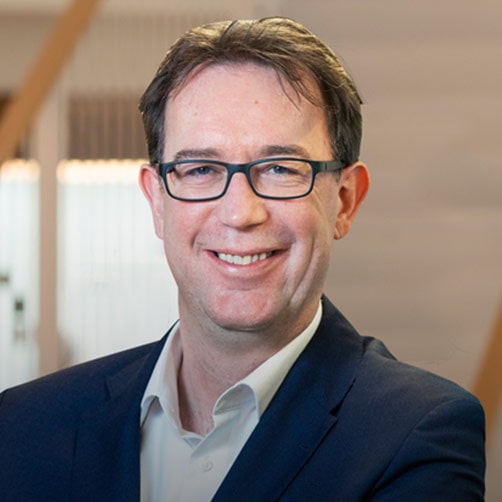
Robert Vries
CEO, HUB Organoids
Topic: Organoids – From Models to Drug Development
Organoid technology is rapidly reshaping the landscape of preclinical drug development by providing patient-relevant models that capture the complexity of human disease. In this presentation, we’ll recapitulate the journey from the initial discovery of adult epithelial stem cell markers to the popular disease model that organoids have become by now. Real-world examples will illustrate the translational power of organoids in bridging the gap between laboratory research and clinical application, accelerating the journey from bench to bedside
Bio: Robert received his PhD in Biochemistry from the Leiden University Medical Center on a molecular study of oncogenic transformation. He continued his scientific career as a Postdoc at Stanford University (USA). Upon his return to the Netherlands, he joined the group of Hans Clevers at the Hubrecht Institute studying adult stem cells. Robert was part of the team that developed the ground-breaking technology that allowed the expansion of adult stem cells in vitro for the development of patient-derived organoids. Expanding and commercializing the newly developed Organoid Technology to improve patients´ treatment outcome became the mission of HUB Organoids B.V. (HUB) of which he is currently the CEO. He successfully led the organization through its acquisition by Merck KGaA, Darmstadt Germany, marking an important milestone in the company’s growth and development.
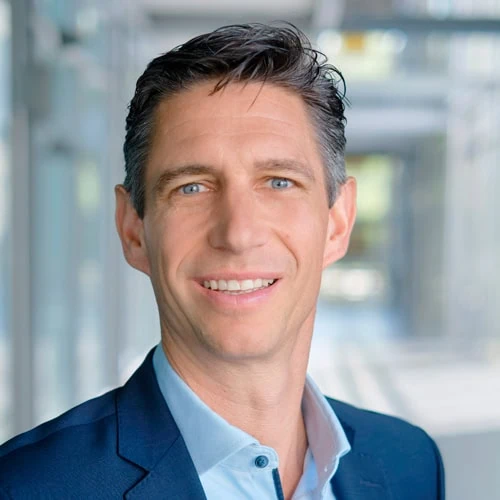
Christian Gnam
Managing Director, IZB
Topic:
News at the IZB