


Der IZBrunch bringt Entscheider aus den IZB-Start-ups sowie Wissenschaftler und weitere Akteure des Life-Science-Ökosystems rund um den Campus Martinsried/Großhadern zusammen. Einmal im Quartal lädt das IZB dazu in den Faculty Club ein.
Im Mittelpunkt steht jeweils ein aktuelles Thema aus Biotechnologie, Medizin und Life Sciences. Das Spektrum reicht vom Einsatz künstlicher Intelligenz in der Medikamentenentwicklung über Theranostik in der Onkologie bis zur Nutzung von Hefen in der Biotechnologie. Zwei Referenten beleuchten das jeweilige Thema aus unterschiedlichen Perspektiven.
Im Anschluss an die Vorträge bietet ein gemeinsamer Business-Lunch Gelegenheit, die Gespräche zu vertiefen. So verbindet der IZBrunch fachlichen Input mit persönlichem Networking und schafft Raum für neue Verbindungen innerhalb der Münchner Biotech-Community.
Die Teilnehmerzahl ist auf 70 Personen begrenzt. Eine vorherige Anmeldung ist erforderlich.
Anmeldung: IZBrunch@izb-online.de
Bitte beachten Sie: Die Teilnahme ist ausschließlich mit bestätigter Anmeldung möglich.
Für Wen?
Faculty Club-Mitglieder, DirektorInnen und NachwuchsgruppenleiterInnen der Max-Planck-Institute, ProfessorInnen der LMU, GeschäftsführerInnen und Vorstände der IZB-Unternehmen sowie Führungskräfte des Campus Martinsried/Großhadern
Format:
Face2Face-Event mit Impulsvorträgen (15 Min.) zzgl. Q&A und anschließendem Business-Lunch
Uhrzeit:
10:45 Uhr bis 13:00 Uhr
Ort:
Restaurant SEVEN AND MORE
in der IZB Residence CAMPUS AT HOME
Am Klopferspitz 21
82152 Planegg / Martinsried
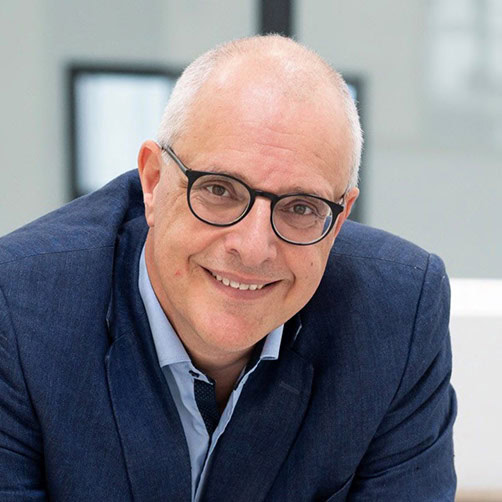
Prof. Andreas Bausch
Heinz Nixdorf Chair in Biophysical Engineering of Living Matter, TUM School of Natural Sciences
Topic: Engineering Biology: From Variability to Predictability
Standardized and Scalable Organoids for Data-Driven Discovery and Applications. Organoids hold great promise for biomedical applications, yet limited reproducibility, scalability, and predictive reliability remain major barriers to their widespread use. Overcoming these challenges requires a concerted effort to develop new engineering technologies that enable controlled, standardized, and scalable organoid production. In this talk, I will present our approaches toward this goal, paving the way for reliable applications and the generation of high-quality, systematic datasets
Bio: Prof. Andreas Bausch is the Founding Director of the Center for Organoid Systems (COS) and the Center for Functional Protein Assemblies (CPA) at the Technical University of Munich (TUM). He initiated and co-directs the Excellence Cluster BioSysteM and serves as Director of the Venture Lab BioSysteM. In 2025, he was awarded the endowed Heinz Nixdorf Professorship in Biophysical Engineering of Living Matter. Following his physics training at TUM and the Université de Montréal, he conducted postdoctoral research at Harvard University before becoming Professor of Cellular Biophysics at TUM in 2008. Internationally recognized for pioneering contributions to the physics of living systems, his research has advanced our fundamental understanding of cytoskeletal mechanics, cellular self-organization, and organoid morphogenesis. Combining quantitative physics with innovative bioengineering technologies, his work establishes new principles for controlling and engineering living matter, bridging fundamental discoveries with scalable biomedical applications
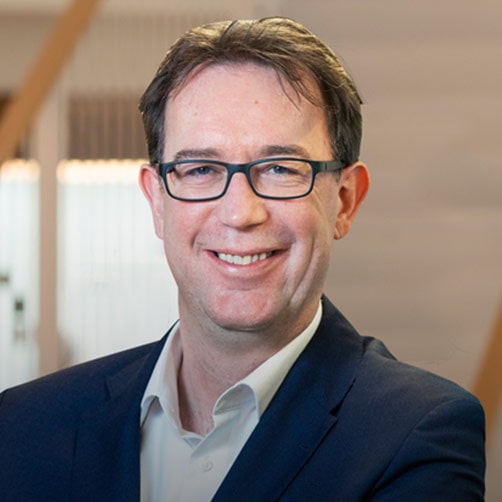
Robert Vries
CEO, HUB Organoids
Topic: Organoids – From Models to Drug Development
Organoid technology is rapidly reshaping the landscape of preclinical drug development by providing patient-relevant models that capture the complexity of human disease. In this presentation, we’ll recapitulate the journey from the initial discovery of adult epithelial stem cell markers to the popular disease model that organoids have become by now. Real-world examples will illustrate the translational power of organoids in bridging the gap between laboratory research and clinical application, accelerating the journey from bench to bedside
Bio: Robert received his PhD in Biochemistry from the Leiden University Medical Center on a molecular study of oncogenic transformation. He continued his scientific career as a Postdoc at Stanford University (USA). Upon his return to the Netherlands, he joined the group of Hans Clevers at the Hubrecht Institute studying adult stem cells. Robert was part of the team that developed the ground-breaking technology that allowed the expansion of adult stem cells in vitro for the development of patient-derived organoids. Expanding and commercializing the newly developed Organoid Technology to improve patients´ treatment outcome became the mission of HUB Organoids B.V. (HUB) of which he is currently the CEO. He successfully led the organization through its acquisition by Merck KGaA, Darmstadt Germany, marking an important milestone in the company’s growth and development.
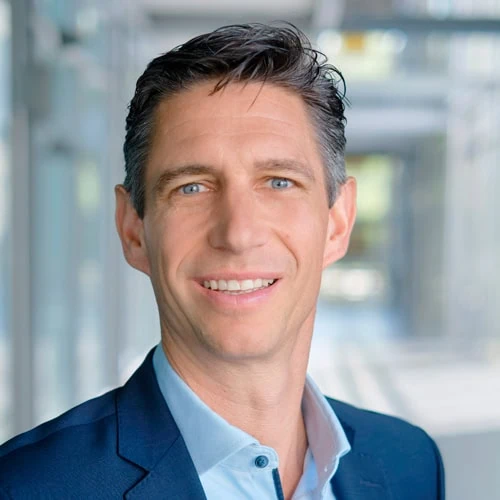
Christian Gnam
Managing Director, IZB
Topic:
News at the IZB